PROVEN SOLUTIONS. GUARANTEED RESULTS.


PROVEN TERMITE SOLUTIONS
THE BAY AREA'S LEADER IN TERMITE ELIMINATION
Termite Inspection Redwood City, CA
Limited Termite Inspections for Redwood City Homes and Properties
Redwood City is one of the Peninsula’s most established communities, with a property mix that looks very different from neighborhood to neighborhood. The city includes historic downtown areas, older homes near long-standing residential streets, hillside properties, Bay-side neighborhoods, remodeled homes, multi-unit buildings, townhomes, newer infill development, and single-family homes that have been updated over many decades.
A homeowner in Redwood City may notice termite pellets near a window frame, wings by a sliding door, wood damage around a deck, mud tubes near a foundation, or suspicious activity in a garage, crawlspace, fence, attic area, or exterior trim. In some homes, the first visible clue may be small. In others, termite activity may be discovered during repairs, maintenance, or remodeling.
Proven Termite Solutions provides limited termite inspections in Redwood City for homeowners and property owners who need help understanding visible termite evidence and possible treatment options. These inspections are designed to evaluate accessible areas for visible signs of termite activity, wood damage, and conditions that may help guide the next step.
With more than 35 years of experience serving the Bay Area, Proven Termite Solutions helps Redwood City property owners understand what may be happening, whether the concern appears consistent with drywood termites or subterranean termites, and which treatment direction may be appropriate.
A Peninsula City With More Than One Type of Termite Concern
Redwood City is not a one-style housing market. The city’s older roots, downtown history, hillside neighborhoods, waterfront influence, and ongoing redevelopment have created a wide range of structures and property conditions.
Some homes include older wood framing, crawlspaces, garages, exterior trim, decks, fences, or additions. Others are located on sloped lots where drainage, shade, landscaping, and foundation access can affect what a homeowner sees around the structure. Properties closer to Bay-side areas or lower-lying neighborhoods may have different exterior conditions than homes near Edgewood, Farm Hill, Emerald Hills, or other elevated areas.
Termite activity does not always appear in the most obvious place. Drywood termites may be hidden inside above-ground wood components such as eaves, fascia, attic framing, window trim, garage wood, or exposed beams. Subterranean termites may be associated with soil, crawlspace areas, foundation edges, slab openings, plumbing penetrations, or other ground-level access points.
Because Redwood City includes so many property types, a limited termite inspection should start with what is visible at that specific property. The same concern in two different homes may lead to different treatment conversations.
What a Limited Termite Inspection Can Help Clarify
When a homeowner sees something that looks like termite activity, the first question is usually simple: is this something I should be worried about?
A limited termite inspection helps answer that question by evaluating accessible areas where visible evidence is present. That may include areas around windows, doors, garages, eaves, fascia, baseboards, decks, fences, crawlspace access points, foundation areas, or exterior wood features.
The purpose is not to make assumptions from one small clue. A few pellets below a window may suggest drywood termite activity, but the surrounding wood and nearby areas still matter. A mud tube near a foundation may point to subterranean termite activity, but the location and access points should be considered. Damaged exterior wood may be isolated, or it may suggest conditions that should be evaluated more carefully around the home.
Proven Termite Solutions uses limited termite inspections to help property owners understand visible termite concerns and possible treatment options. These inspections are limited in scope and are not intended for use as real estate transaction reports.
Scheduling available for Redwood City homeowners and property owners.
Termite Clues Often Start in Small, Ordinary Places
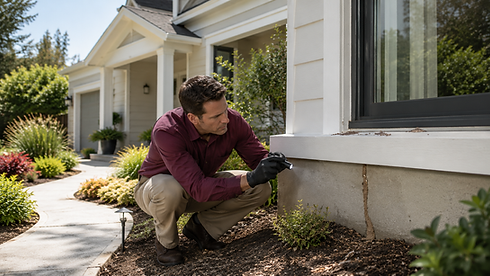
Many termite concerns begin with something that is easy to overlook. A small pile of pellets on a windowsill. Wings near a patio door. A soft board on a deck. A section of trim that looks uneven. A thin earthen tube near a foundation. Wood that sounds hollow when tapped.
In Redwood City homes, these clues may appear in places homeowners use every day, but they can also show up in areas that are rarely checked. Garages, attic spaces, side yards, crawlspace openings, retaining boards, fences, porch framing, and exterior trim can all reveal termite activity before the issue becomes obvious inside the main living space.
This is why visible evidence should not be dismissed just because it looks minor. Termites often remain hidden inside wood or behind surfaces. What a homeowner sees may be only the first visible sign of activity.
A limited termite inspection helps connect those clues to a more practical next step.
Drywood Termites in Redwood City Homes
Drywood termites can live inside wood without contact with the soil. That makes them a concern in above-ground wood features throughout Redwood City homes and properties.
Possible areas of concern include attic framing, eaves, fascia boards, exposed beams, garage framing, window trim, door trim, decks, fences, patio covers, porch wood, built-ins, and detached structures. Because drywood termites live inside the wood, homeowners may not see the termites themselves.
Instead, visible signs may include small pellets, discarded wings, swarmers, small openings in wood, blistered surfaces, or wood that appears weakened.
Treatment depends on where the evidence is found. If drywood termite activity appears limited and the affected area can be accessed, localized termite treatment may be considered. If evidence appears in multiple areas or may be hidden in spaces that cannot be reached directly, whole-structure fumigation may need to be discussed.
Subterranean Termites and Ground-Level Entry Points
Subterranean termites are different because they live in the soil and often enter structures from below or around the foundation. In Redwood City, ground-level termite concerns may be influenced by crawlspaces, slab edges, landscaping, shaded side yards, foundation openings, retaining boards, moisture near the structure, or wood close to soil.
Visible signs may include mud tubes, damaged wood near the ground, soft wood close to foundation areas, or activity around crawlspace supports, exterior structures, or soil-adjacent wood.
Subterranean termite treatment is not the same as drywood termite treatment. If the visible evidence suggests termites are entering from the soil, the treatment conversation may focus on affected ground-level areas and the connection between soil and structure.
A limited termite inspection can help determine whether visible signs appear consistent with subterranean termite activity and what treatment direction may be appropriate.
Redwood City Properties Often Have Layers of Construction
One reason termite concerns can be difficult to interpret in Redwood City is that many homes have changed over time. Older houses may have been expanded, remodeled, repaired, or partially rebuilt. Garages may have been converted or updated. Decks, fences, and exterior wood features may have been added later. Some properties include older framing behind newer finishes.
Those layers can make termite activity harder to understand from the surface.
A damaged board may be part of an older section of the home. Pellets may appear near a remodel transition. Exterior trim may hide older wood. A crawlspace or garage may contain components that were not updated at the same time as the rest of the property.
For homeowners, the important question is not just whether termites are present. It is where the evidence appears, what areas are accessible, and whether the concern looks limited or more widespread.
When Localized Treatment May Be Reasonable
Localized termite treatment may be appropriate when drywood termite activity appears concentrated in a defined area and the affected wood can be accessed.
In Redwood City, that could involve a section of trim, eave, fascia, deck member, fence board, garage component, patio cover, or another identifiable wood feature. This approach can make sense when the visible evidence supports a focused treatment rather than a broader structural concern.
However, a localized treatment recommendation should not be based only on the fact that the visible sign is small. Termite activity may extend into nearby or concealed wood. The surrounding area, accessibility, and pattern of visible evidence should be considered before deciding whether localized treatment is the right fit.
Proven Termite Solutions helps homeowners understand when a targeted approach may be appropriate and when another treatment option should be considered.
When Fumigation May Need to Be Discussed
Whole-structure fumigation may be considered when drywood termite activity appears widespread, concealed, or difficult to reach directly.
This may happen when evidence appears in multiple parts of a Redwood City home, when activity may be inside attic framing or wall areas, or when the affected wood cannot be adequately accessed through a localized approach. Older homes, additions, enclosed wood features, attached garages, and complex rooflines can all affect whether direct treatment is realistic.
Fumigation is not automatically recommended for every drywood termite issue. It should be considered when the visible evidence and structure suggest that localized treatment may not provide the right level of coverage.
Proven Termite Solutions is licensed in Branch 1, which supports fumigation services when drywood termite activity is hidden, widespread, or difficult to treat directly.
Licensed for Inspection, Treatment, and Fumigation Decisions
Proven Termite Solutions is licensed in Branch 1 and Branch 3 structural pest control.
Branch 1 supports fumigation when drywood termite activity is widespread, concealed, or not practical to treat through localized methods.
Branch 3 supports wood-destroying organism services, including limited termite inspections, termite treatment, localized treatment considerations, subterranean termite treatment, and related corrective recommendations.
For Redwood City homeowners, this matters because termite concerns are not always obvious from one sign. A property may show drywood termite pellets in an upper wood area, mud tubes near a foundation, exterior damage around a deck, or evidence in more than one part of the structure. The treatment recommendation should be based on what is visible, what is accessible, and what type of termite activity appears to be involved.
Places Redwood City Homeowners Should Watch
Termite activity may appear in different areas depending on the home’s age, construction, maintenance history, and surrounding conditions.
Window Frames, Door Trim, and Interior Edges
Drywood termite evidence may appear near window frames, door trim, baseboards, built-ins, or interior wood edges. Small pellets or wings in these areas can be easy to miss.
Eaves, Fascia, and Roofline Wood
Upper wood areas can conceal drywood termite activity for a long time. Eaves, fascia boards, rafters, attic framing, and exposed beams may not show obvious damage until activity has already developed inside the wood.
Garages, Side Yards, and Storage Areas
Garages and side yards are common places for homeowners to overlook termite clues. Stored items, older framing, fence lines, and exterior wood features can hide visible evidence until damage becomes more noticeable.
Crawlspaces, Slab Edges, and Foundation Areas
Subterranean termites may use hidden ground-level access points. Crawlspace supports, slab edges, foundation cracks, plumbing penetrations, and shaded soil areas should be taken seriously when visible signs appear nearby.
Decks, Fences, Retaining Boards, and Patio Covers
Exterior wood can show termite activity before the main living area does. Damage in a deck, fence, retaining board, or patio cover may be isolated, but it can also indicate that nearby areas should be evaluated.
Warning Signs That Should Prompt a Closer Look
Termite activity is often discovered through subtle changes. Redwood City homeowners should pay attention to small signs around wood, soil, foundations, garages, and exterior structures.
Pellet-Like Droppings
Small, gritty pellets beneath windows, eaves, trim, attic access points, garage framing, decks, or patio covers may indicate drywood termite activity inside the wood.
Wings or Swarmers
Swarmers or discarded wings may appear near windows, doors, skylights, garage openings, porch lights, or interior lights. These signs can indicate termite activity nearby.
Wood That Sounds Hollow or Feels Soft
Wood affected by termites may feel soft, sound hollow, appear blistered, or show surface changes. These signs may appear around trim, decks, fascia, garage wood, fences, or exterior framing.
Earthen Tubes
Subterranean termites may build earthen tubes along foundation walls, crawlspace supports, slab edges, retaining boards, stem walls, or shaded areas near soil.
Exterior Wood Damage
Damage in fences, decks, patio covers, porch posts, retaining boards, or detached structures should not be ignored. Even when the damage appears outside the main home, it may be worth evaluating the structure and nearby areas.
If you notice termite pellets, wings, swarmers, mud tubes, damaged wood, or suspicious activity around wood features on your Redwood City property, Proven Termite Solutions can provide a limited termite inspection and recommend an appropriate treatment option.
Termite Inspection and Treatment Guidance for Redwood City Properties
The purpose of a termite inspection is to help homeowners understand what is visible and what treatment options may make sense. Some Redwood City properties may be candidates for localized termite treatment. Others may require fumigation if drywood termite activity appears broader or hidden. If subterranean termite activity is present, treatment may need to focus on soil and foundation-adjacent areas.
Proven Termite Solutions helps Redwood City homeowners and property owners evaluate visible termite concerns, understand the possible treatment paths, and make a more informed decision about protecting their property.
Redwood City Neighborhoods and Nearby Areas Served
Proven Termite Solutions provides limited termite inspections, termite treatment, termite control, drywood termite treatment, termite fumigation, localized termite treatment, and subterranean termite treatment throughout Redwood City, including Downtown Redwood City, Mount Carmel, Eagle Hill, Roosevelt, Woodside Plaza, Farm Hills, Edgewood Park, Canyon, Friendly Acres, Redwood Shores, Palm Park, Centennial, Stambaugh Heller, North Fair Oaks-adjacent areas, neighborhoods near El Camino Real, Woodside Road, Veterans Boulevard, Alameda de las Pulgas, and surrounding Peninsula communities.